
A combination of one of the lowest labour costs and a large surplus workforce, which will continue to grow until 2031, is one of the key competitive edges that India is leveraging to challenge its rivals in Southeast Asia in the race for a China-Plus-One strategy. Apart from India, the countries in the race to woo global companies that manufacture in China, as well as the supply chains to their country include Thailand, Indonesia, Malaysia, the Philippines, and Vietnam. On the labour front, India is a clear winner.

Experts say while the increasing demand for a ban on Chinese goods might make for good optics, the reality is that India is still heavily dependent on that country in a wide range of industries like electronics, mobile devices, auto, pharma, telecom equipment, and fertilisers.

The move comes against the backdrop of the US and some of its allies banning the purchase of Chinese telecom gear over security concerns and pressuring other countries to follow suit.
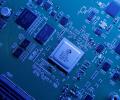
Taiwan is keen to collaborate with India and help it become a leader in the semiconductor space, Jason Ho, chairman of the Taiwan Chamber of Commerce in India, said, asserting that the Taiwanese companies have the supply chain for things that the Indian market needs. Manufacturing semiconductors - used in electric and hybrid cars, drones, and communication devices - is fairly complicated, entails huge investment, and can be a cumbersome process.

Oil-to-telecom conglomerate Reliance Industries Ltd head Mukesh Ambani continues to be the richest Indian and has now broken into the world's top 10 wealthiest persons in the latest Forbes 2024 Billionaire List. Ambani, 66, is ranked 9th on the list with a wealth of $116 billion, up from $83.4 billion in the 2023 ranking, according to Forbes. Gautam Adani is the second richest Indian and is ranked at No.17 on the global list.

FLAG Telecom, the global telecom arm of the Anil Ambani-led Reliance Communications, is believed to have won a $35 million worth international deal for providing international bandwidth to China Netcom.

'Investors should not go for lump-sum investments in infrastructure funds at this point.' 'The SIP route is the best to avoid any major disappointment.'

Mergers and acquisitions (M&As) in India have moved into the slow lane, dropping 43 per cent in terms of deal value to touch $13.37 billion since January this year to date, compared to the same period in the last year. According to data sourced from Bloomberg, Indian companies reported deal value worth $23.5 billion between January and March 22, 2023. Data Infrastructure Trust's acquisition of American Tower Corporation's India telecom towers business for $2.5 billion was the top deal for the ongoing quarter so far, followed by the Highway Infrastructure Trust's acquisition of PNC Infratech's road projects for $1.08 billion.

Among the Sensex firms, major winners included Tata Steel, rising 3.77 per cent, followed by HCL Tech, which gained 3.62 per cent. IndusInd Bank and PowerGrid closed with a gain of 3,60 and 3.34 per cent, respectively. Other gainers were Tech Mahindra, Hindustan Unilever, Bajaj Finserve and Bharti Airtel, among others. On the other hand, ICICI Bank, Axis Bank, Asian Paints, Bajaj Finance and TCS were the only laggards, sliding up to 2.94 per cent.

'It's the brazen corruption involving politicians that makes you sit up years after the event,' notes Nivedita Mookerji after reading B K Syngal's Telecom Man.

'A lack of strategic trust and the 'persistent security dilemma' prevails between India and China,' points out Dr Rup Narayan Das.

The S&P BSE Midcap and the S&P BSE Smallcap indices have managed to stay afloat in a volatile January that saw the frontline indices hit their respective 52-week high levels and then slip. While the S&P BSE Sensex has lost over 2 per cent thus far in January, the S&P BSE Midcap and the S&P BSE Smallcap indices have gained nearly 2.5 per cent and 4 per cent, respectively during this period.
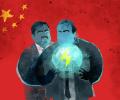
Reliance's big-bang entry across the solar ecosystem will cut dependence on Chinese imports drastically. And Ambani's repeated emphasis that RIL's new energy foray will be 'a truly global business' points that his group is playing not just for a share of the Indian pie but to be the OEM in the larger 5,000 GW global market by 2030, points out Shailesh Dobhal.
China-based telecom equipment supplier Huawei Technologies, which has bagged a $200 million contract from Reliance Communications, is upbeat on India and expects to clinch other multi-million dollar outsourcing deals in the country.

Telecom Minister A Raja said on Friday that he has met Home Minister P Chidambaram over the issue of import of telecom equipment, especially from China, and hoped the issue would be resolved "in a couple of weeks".
After banning telecom equipment from Chinese manufacturers like Huawei suspecting spy software embedded in the gadgets, India has now appointed Huawei to filter imported equipment for malicious software.
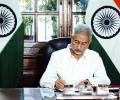
Signalling both change and continuity, India's new government, headed by Prime Minister Narendra Modi for a third consecutive term, got into work gear on Tuesday with cabinet ministers and ministers of state filing into their respective offices to assume charge.

We asked colleagues, present and past, to reflect on a man who has made such a difference to their lives and careers. Here it is then, a rich collection of memories that offer enchanting glimpses of the enigmatic Ajit Balakrishnan.

India's security concerns over Chinese telecom equipment are groundless, a Chinese trade body has said, asserting that Chinese companies used same technologies as their Western counterparts and banning them was discriminatory.
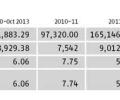
Since August 2013, FIPB has approved two FDI proposals in the telecom sector.

50 per cent of the flashlights market in the country is dominated by Chinese imports, which have been increasing.
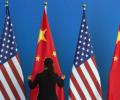
Chinese observers believe the Sino-US relationship will be impacted by issues in North Korea, Japan, India, Ukraine and Iran and that conflicts with these 'third parties' will without exception ultimately become conflicts between China and the US, points out former RA&W officer Jayadeva Ranade.

Telecom industry in India is in a mess and it is a result of thinking that more the competition better it is, Vodafone India CEO & Managing Director Marten Pieters said on Thursday.

A crown of thorns awaits the next telecom minister at Sanchar Bhawan as the new incumbent will have to address a host of tricky issues like industry infighting, tariffs and improving financial health of the Rs 2.3 lakh crore industry.

'Similar to the case of the digital payment system where the government created a public platform and others joined in, we are exploring a similar structure to create a PPP platform where the compute required for AI could be accessed by the small player.'

Sibal said that Trai had compared India with China.

Telecom and petchem businesses will drive growth for RIL.

The Delhi Police, in a first information report (FIR) filed under anti-terror law Unlawful Activities (Prevention) Act (UAPA) following allegations against news portal NewsClick, has alleged that a large amount of funds came from China in order to disrupt India's sovereignty and cause disaffection against the country.
Voicing its concern over reports that its telecom companies have been blacklisted by India, China on Friday asked New Delhi to treat its firms fairly and called for an open and transparent system for them to operate in.

Capital expenditure by Indian companies is likely to see an uptick in the upcoming quarters as capacity utilisation has surpassed the critical threshold of 75 per cent, and numerous companies have deleveraged their balance sheets, according to analysts. The first quarter of the current financial year has shown improved profitability, driven by a decrease in input prices. This, according to analysts at Care Ratings, should stimulate a revival in the private capex cycle.

The Army on Tuesday said it was prepared to give an appropriate response to any adverse aggressive designs of China in the Ladakh sector, maintaining that the integrity of the country was being ensured through physical patrolling and technical means.

Professor Lajos Hanzo, chair of Telecommunications at the University's School of Electronics and Computer Science, and his team are working in a consortium with nine UK institutions and seven Indian Institutes of Technology to design the next generation of wireless systems across India.

Airtel already offers services in Sri Lanka, Bangladesh and 17 African countries apart from India.

We understand the electoral compulsions, the desperate need for the BJP to have at least 50 per cent of the Hindus vote for them in Uttar Pradesh in a few months. For that, you need polarisation, put your own Muslim compatriots on the 'other' side. This is how your domestic politics runs contrary to your national, strategic interest, warns Shekhar Gupta.

'The huge amount of investments being made by telcos in India for telecom gear, there is no way this demand could be met only by Europeans.' 'The Chinese are quick in installation and offer great value for money.'

Adani group opened a $1.2 billion copper plant, bought a port in Odisha, raised stakes in a cement company and stitched an alliance with rival Mukesh Ambani's Reliance Industries, all in a matter of one week in signs that the apples-to-airport conglomerate has shrugged off the Hindenburg effect and is back to rapid expansion spree. In the last one week, Adani group has through regulatory filings and press statements announced expansions and investments in its mainstay ports business, diversification into metal refining, fund infusion into a two-year-old cement foray and continuing progress in the commissioning of its mega solar project.

Kotak Mahindra Bank was the biggest loser from the Sensex pack, skidding 1.83 per cent, followed by Axis Bank, NTPC, Hindustan Unilever, ICICI Bank, Bharti Airtel, Reliance Industries, HCL Technologies, IndusInd Bank and Nestle. In contrast, Bajaj Finance, Bajaj Finserv, Tech Mahindra, Tata Consultancy Services, Titan, Infosys, HDFC Bank, HDFC and ITC were the gainers.

Since the Centre tightened the Press Note 3 norms in April last, as many as 150 private equity/venture capital investment applications from China and Hong Kong are pending with the government, starving the country's start-up ecosystem of funds, says a report. The Press Note 3 (PN3) changes were effected in April, restricting foreign direct investment from countries that share land borders with India. Analysts are of the view that the move was primarily aimed at China as lot of private funds were investing billions into domestic companies.
